

What Is a Roofing Square? A Homeowner’s Guide
A roofing square is a unit roofers use to measure roof area. One roofing square equals 100 square feet of roof surface. If a roof measures 2,000 square feet, it has 20 squares before adding material for cuts and waste.
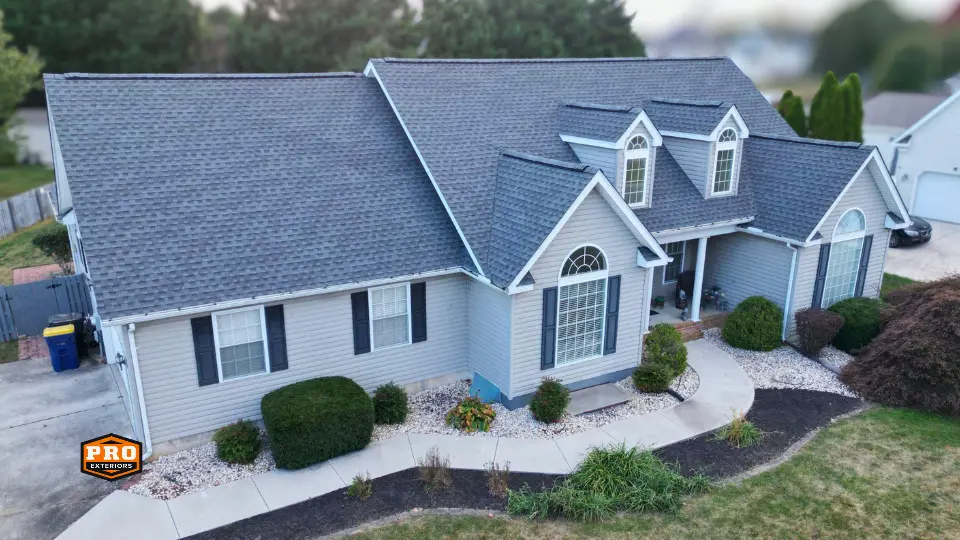
Why do roofers measure in squares?
Roofing squares make it easier to estimate and order materials. Shingles, underlayment and some other roofing products are commonly sold or estimated in quantities tied to squares. Instead of discussing thousands of square feet, a contractor can describe a roof as 20 squares and then account for the specific products and details needed.
A square describes area, not a fixed length or number of shingle bundles. The amount of material used per square depends on the product. For example, shingle packaging states its own coverage, so check the manufacturer’s specifications rather than assuming every product uses the same number of bundles.
How do you calculate roofing squares?
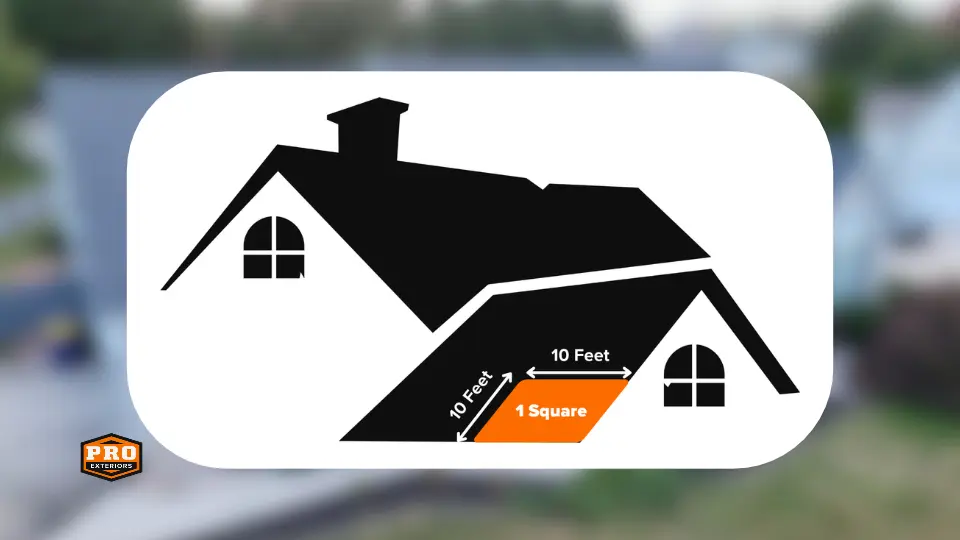
To convert roof area to squares, divide the roof’s surface area in square feet by 100:
Roof area ÷ 100 = roofing squares
For example, a roof with 2,400 square feet of surface area is 24 squares (2,400 ÷ 100 = 24). A contractor then considers the roof’s layout, selected materials, and installation details when calculating the order.
It is important to use the sloped roof surface, not just the home’s footprint. A pitched roof has more surface area than the flat area it covers. Roofers measure or calculate each roof plane and account for features such as hips, valleys, dormers and ridges.
To determine how many squares your roof is, you can use this free calculator (click here).
Does a roofing square include waste?
No. A square is simply 100 square feet of roof area. A material estimate may include extra coverage for cuts, overlaps, breakage and the shape of the roof. The amount varies with roof complexity, shingle type and installation pattern, so there is no single waste percentage that applies to every home.
That is one reason an estimate may show more roofing material than the home’s measured roof area seems to require. Ask your contractor to explain how the roof was measured and how the material quantity was calculated.
How many shingle bundles are in a roofing square?
There is no universal bundle count. Many common asphalt shingles are packaged so that three bundles cover about one square, but some products use a different number. Always follow the coverage printed on the specific manufacturer’s packaging or product data.
Also, a square refers to the roof area being covered; it does not mean the finished roof will have exactly 100 square feet of exposed shingle. Shingles overlap as they are installed, and packaging accounts for the product’s intended coverage.
What does a roofing square mean on an estimate?
On a roofing estimate, the square count is a way to describe the measured roof area and help quantify materials and labor. The total price can also depend on tear-off, underlayment, flashing, ventilation, roof access, decking repairs and other project details. Compare the scope of work as well as the square count when reviewing estimates.
For homeowners in Delaware and Maryland, roof shape, pitch and the condition of the existing roof all affect how a replacement is planned. A professional inspection can confirm measurements and identify details that are difficult to judge from the ground.
Quick answer
One roofing square equals 100 square feet of roof surface. Divide the measured roof area by 100 to convert square feet into squares. Material orders may include additional coverage for cuts and the roof’s design, and shingle bundle coverage varies by product.
If you are planning a roof replacement, Pro Exteriors can inspect your roof, explain the measurements and walk you through the estimate. Contact Pro Exteriors by clicking here or calling at 302-664-1700.

Recent Articles
The Information Hub


Your Best Roofing System Is A Call Away
Experience The PRO Difference
"*" indicates required fields